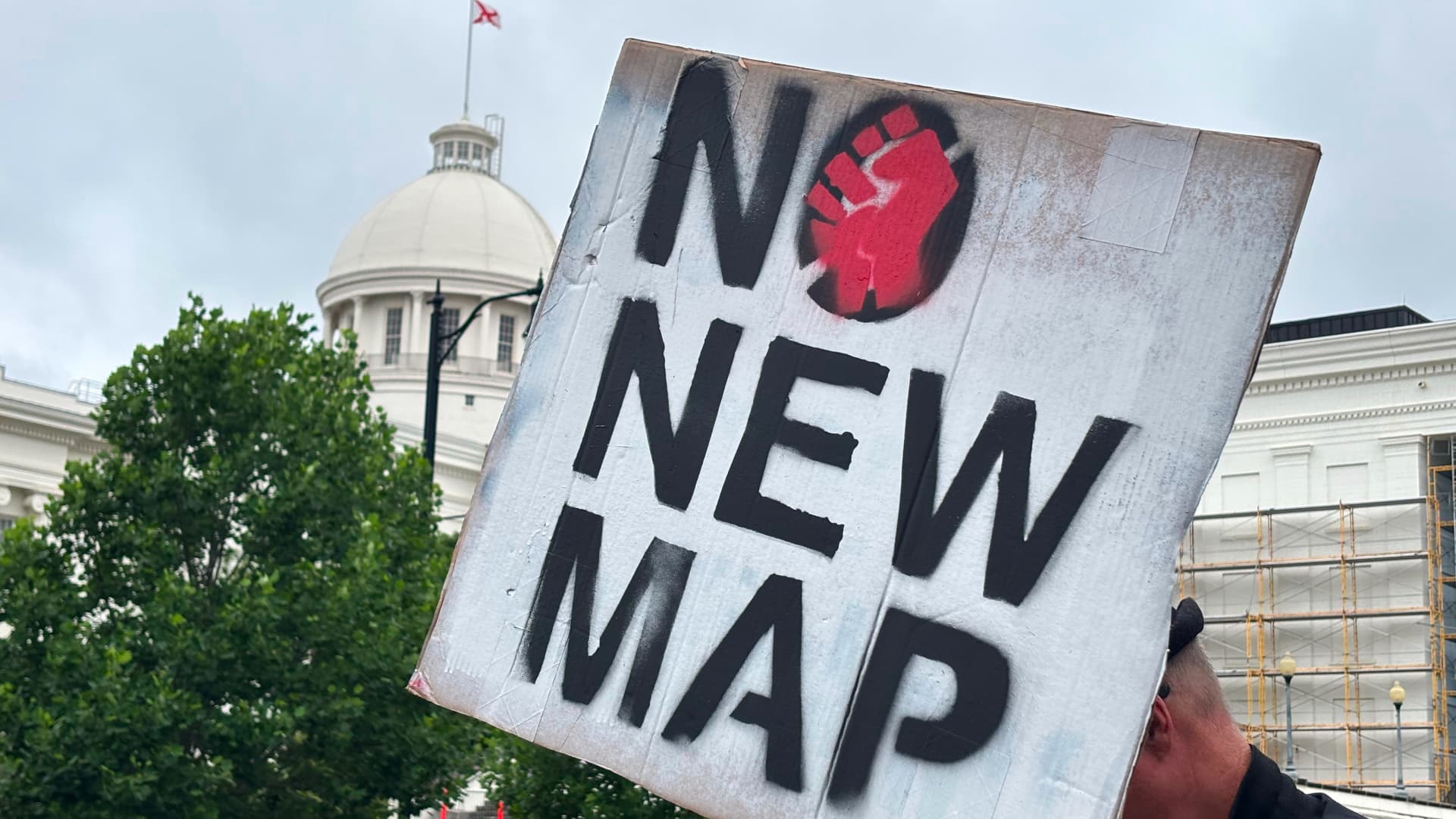
Judges block Alabama districts that would dilute Black vote in 2026 congressional elections
A panel of federal judges on Monday blocked Alabama from using congressional district maps that would dilute the votes of Black people in the 2026 midterm elections.
Read more Move over, seltzer. Non-carbonated drinks are taking the spotlight
The in U.S. District Court in Birmingham, Ala., which found that the maps “intentionally discriminated based on race,” sets the stage for the Supreme Court to determine whether the maps, which were first proposed in 2023, can be used by Alabama this year.
The decision is a victory — albeit possibly a temporary one — for Democrats as they try to win a majority in the House of Representatives in November’s elections.
Republicans last year began a series of congressional map redrawings in an effort to retain their ultra-thin majority in the House.
The three-judge panel issued its ruling in response to the Supreme Court telling it to revisit the question of whether the maps could be used in light of the Supreme Court’s recent ruling in a case known as Louisiana v. Callais, which found that Louisiana’s drawing of its own congressional map was a racial gerrymander.
Read more Trump to host Cabinet meeting at Camp David on Wednesday as Iran talks continue
The panel noted that it previously had ruled that Alabama’s map of districts violated the “Voting Rights Act of 1965 and intentionally discriminated against Black voters based on race in violation of the Fourteenth Amendment to the United States Constitution.”
The ruling came four days after the panel heard oral arguments about the maps.
“As we see it, the irreducible minimum is that federal law requires that all Alabamians have an opportunity to vote under districting plans untainted by intentional race-based discrimination,” the panel wrote.
“We do not lightly intrude in state affairs, but our previous review of the undisputed evidence left us in no doubt that Alabama’s legislatively enacted plan (the ‘2023 Plan’) intentionally discriminated based on race in violation of the Constitution,” the panel said. “Our re-examination in light of Callais yields the same conclusion. We again cannot understand the 2023 Plan as anything other than intentionally discriminatory.”