Why flights are so expensive and will likely stay that way
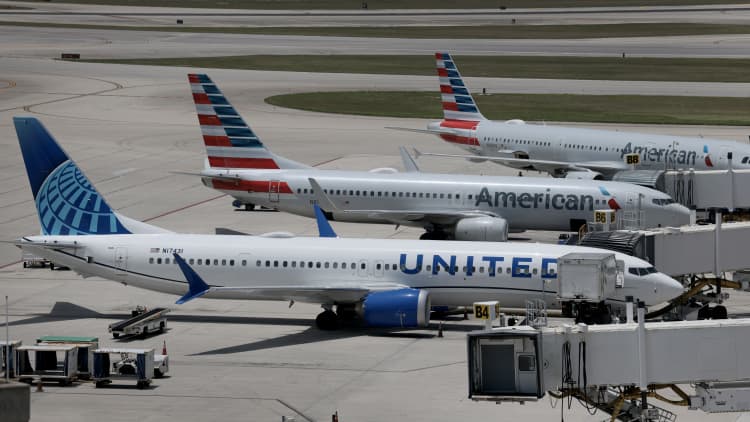
Wherever volatile fuel prices head this year, don’t expect bargain flights.
Airfare in the U.S. in June was up 26.5% compared with a year earlier, according to the latest federal data.
Airline leaders say customers continue to book even after carriers hiked fares. They told Wall Street analysts this month that they’re expecting to hold onto that pricing power at least through the rest of the year, if not longer.
Traveler Marjorie Aran said she and her husband paid a combined $800 to go from New York to Chicago in economy on United Airlines this week to visit their daughter.
“We used to go to Chicago for a couple of hundred dollars,” she said. Asked if she would skip a trip because of the fares she said no. “We can afford it.”
Airlines are betting that stays true for millions of consumers.
The average Southwest one-way fare, for example, was $225.61 in the second quarter, up from $186.65 during the same span of 2025.
“Despite high fuel and high prices, we’re seeing really strong demand,” Southwest Airlines CEO Bob Jordan told CNBC’s “Squawk on the Street” in late July.
United said it expects to pay about $6 billion more for fuel this year than it expected at the start of 2026. American Airlines forecast a $6 billion increase in fuel costs compared with last year, each a jump of a more than 50% from 2025. Both carriers said demand is still strong, even as they’re passing costs on to customers with higher fares.
“We observed minimal to no negative impact on demand from higher price points, a trend we see continuing,” United Chief Commercial Officer Andrew Nocella told Wall Street analysts on the company’s July 16 earnings call. The carrier expects unit revenue year over year for the rest of 2026 to rise and even exceed the second quarter’s increase, he said.
Airlines are eager to make up not just the billions of dollars more they’ve paid for fuel this year, but also to cover higher costs of labor, maintenance and basic operating expenses like increased airport fees.
“Labor costs have escalated dramatically. Maintenance is off the charts in terms of escalation. And those are all costs that every single airline pays the same,” United CEO Scott Kirby said on the call.
Volatility continues
The surprise surge in fuel costs — airlines’ biggest expense after payroll — was a shock to the industry. Airlines pruned schedules this year, which can mean fewer flights per day or week on a certain route. That leaves customers with a lower number of flights to choose from and can lift fares.
According to S&P Global Energy Platts data, jet fuel prices have eased from four-year highs in April, but are still up about 50% since Feb. 28, when the U.S. and Israel’s strikes on Iran kicked off the monthslong military conflict that has choked off a main shipping channel for months.
United said its fuel costs rose $575 million from the start of July until mid-month as it was reporting results, knocking $1.12 off of third-quarter adjusted earnings.
In a sign of how seriously airlines were taking the turmoil in fuel markets this year, Southwest — fearing a supply crunch on the import-reliant West Coast — sent a boat filled with more than 12 million gallons of jet fuel, about a week’s supply for the airline, through the Panama Canal from Houston to Los Angeles in May. It was the first time the airline had sent fuel from Texas to another U.S. destination by sea.
U.S. Gulf Coast jet fuel was going for about $3.60 a gallon, as of Monday, according to S&P Global Energy Platts. While that’s off from $4.78 a gallon in April, prices vary depending on geography and on local supply.
The volatility that’s come along with on-again, off-again ceasefires with Iran has also made it harder for airlines to schedule and price flights.
Tightening grip on consumers
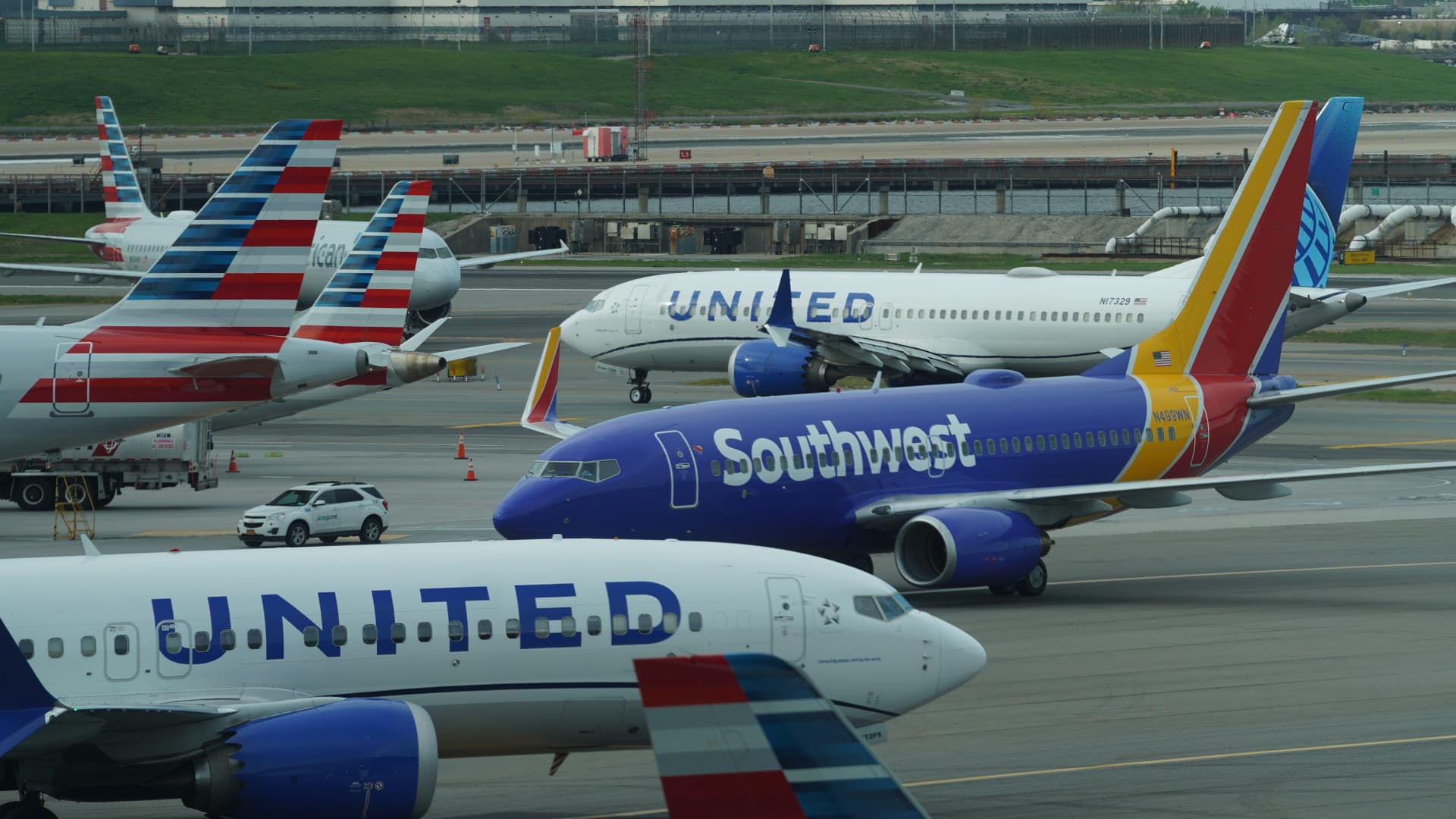
As fares and fuel rise, the four biggest U.S. airlines — American, Delta Air Lines, United and Southwest — have been gaining share of the U.S. market.
Read more Capital One says it closed Trump Organization’s accounts after anti-money laundering probe
According to Cirium data, those carriers have 82.1% share of the seats flown by U.S. airlines this year, up from 80.7% last year and 79.7% in 2022. That increase comes even as Southwest, which carries more passengers domestically than any other, is barely growing this year.
That increasing share for big airlines is in part because there’s less competition from some smaller rivals.
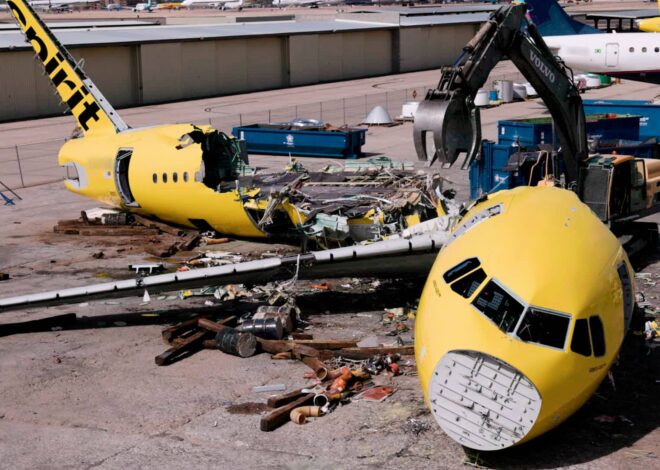
Spirit Airlines, the iconic U.S. discounter, collapsed in May, taking tens of millions of seats off the market overnight.
Spirit’s problems were bubbling for years: Costs were on the rise for labor and other expenses, many of its Airbus jets were grounded by a Pratt & Whitney engine manufacturer defect, and upmarket travel was outshining economy class. Last summer, it filed for bankruptcy protection for the second time in a less than a year, with some analysts criticizing the carrier for not doing enough in its first Chapter 11 to cut costs. The carrier shut down before dawn May 2, failing to reach a deal with bondholders, including for a potential government bailout.
Some smaller low-cost airlines are moderating their growth, if not shrinking altogether, to save money as fuel prices remain high. According to Cirium, Avelo is shrinking and so is a combined Allegiant and Sun Country, which completed their merger in May.
Still, JetBlue Airways, Frontier Airlines and Breeze Airways, a startup launched by JetBlue founder David Neeleman are planning to grow.
“Despite this second-half earnings improvement, we plan to continue to maintain a conservative capacity profile given that the geopolitical backdrop remains fluid and fuel remains volatile,” JetBlue CEO Joanna Geraghty said on an earnings call on Tuesday.
JetBlue forecast an increase in unit revenue of as much as 16.5% in the current quarter.
Frontier, which is now the largest U.S. discounter, is also enjoying increased pricing power. Its average fare revenue in the second quarter was $63.04, up from $40.94 the year before, thouh its non-fare revenue, which includes seating fees and other add-ons, was down 1% from the year-earlier period.
The Denver-based airline is planning to grow capacity as much as 18% this quarter and forecast unit revenue growth of 20%. It plans to expand about 7% in the fourth quarter.
The increase in revenue has helped offset higher fuel prices, Frontier CEO Jimmy Dempsey said in an interview Thursday. That’s key to stabilizing the carrier, which lost money in five of the past six years.
“There’s a lot of energy in the airline about bringing us back to profitability,” Dempsey said.
Frontier, JetBlue and Allegiant are planning to introduce first-class seats in the coming months, roomier, more expensive options that executives say will cater to customers looking to pay up for more space.
Post-summer test
The next few months, when the big summer travel rush ends, will determine just how much airlines can pass along to customers. And the summer season is ending earlier and earlier, with August not as strong of a demand month as it used to be. However, carriers also say that for international travel, customers are booking more often in the fall and other traditionally off-peak periods, to avoid crowds, high prices and oppressive heat.
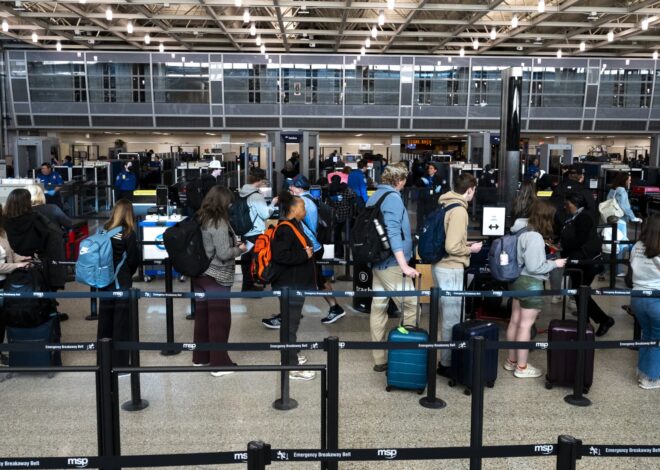
Airport checkpoint screenings are down 0.5% from last year through July 24, and down 2.6% from the four weeks that ended that day, David Vernon, airline analyst at Bernstein, said in a Monday note.
Justin Wittekind, 27, a podcast writer and researcher, who was on his way back to Ontario, California, from New York said he paid about $340 on United. He said he would likely think about drawing the line at $400 for a round trip.
Read more Trump’s threat to push ahead on settlement fund injects new uncertainty into attorney general talks
“But if I have to go home … I’ll pay $400, but I wouldn’t like it,” he said.
Read more CNBC airline news
- Southwest Airlines put Texas jet fuel on a boat to LA for the first time amid supply worries
- United Airlines’ new upsell: Keeping other travelers out of the middle seat
- Delta launches ‘basic business’ fares without lounge access, seat selection
- Record heat, crowds drive offseason boom in international travel
- ‘Bring ’em on’: Delta wants United’s crown over the Pacific, too
- Meet the pilots flying Spirit Airlines’ yellow jets to the desert