Moving Embassy Office Furniture in Washington, D.C. With Greater Precision
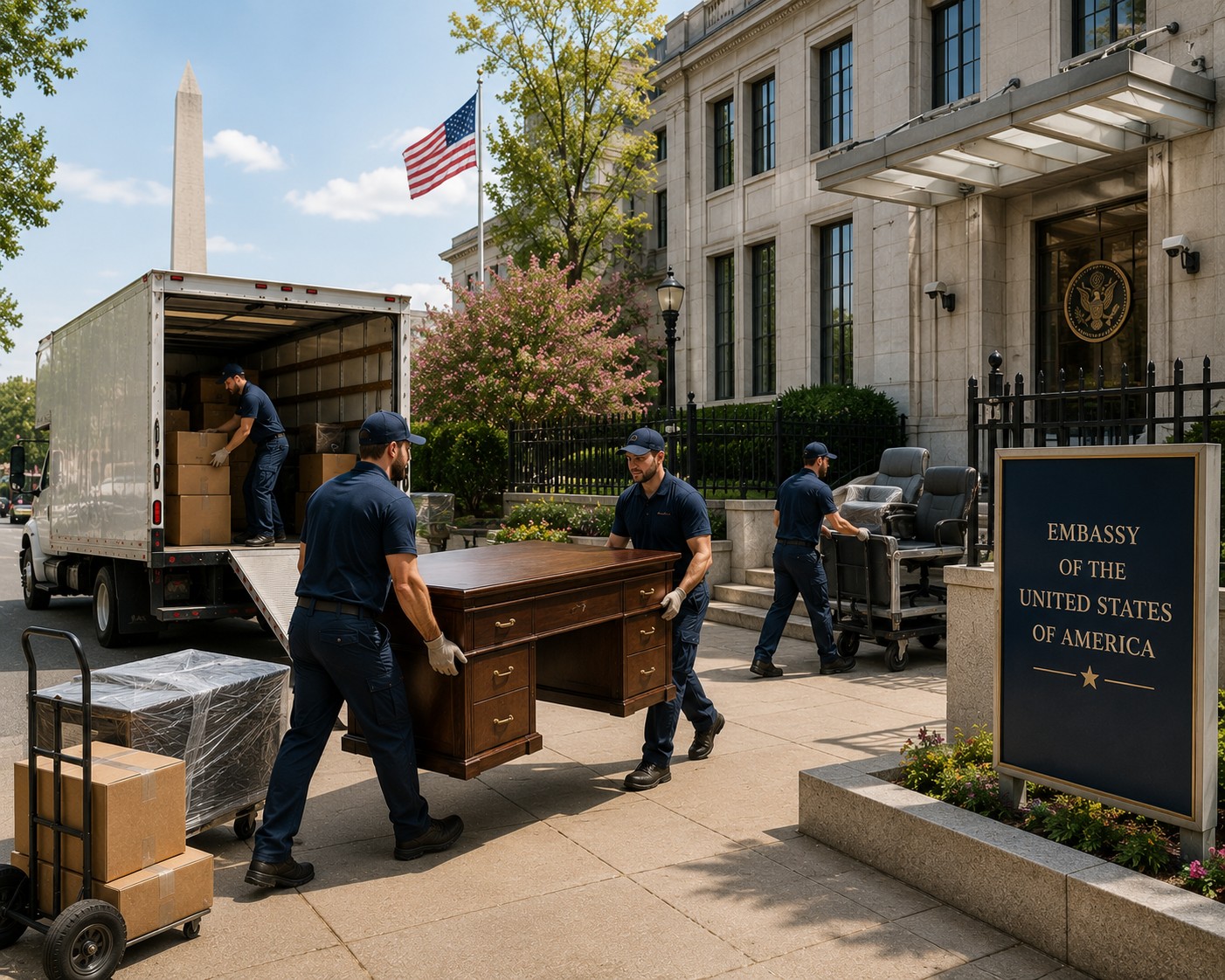
An embassy office relocation has little in common with an ordinary corporate move. Furniture may need to be transferred between highly controlled buildings, schedules can be rigid, and certain rooms may contain furnishings that have both practical and diplomatic significance. Even a seemingly simple transfer of desks, conference tables, cabinets, and reception furniture can require careful coordination.
For organizations preparing a diplomatic-office relocation, the objective is to move efficiently without disrupting daily operations or overlooking access requirements.
Begin With a Controlled Inventory
Before anything is packed, establish exactly what belongs in the shipment.
Create separate categories for desks, executive furniture, conference-room pieces, filing cabinets, seating, shelving, reception equipment, artwork, and miscellaneous office contents. Assigning locations to each item makes it easier to determine what will be transported, stored, replaced, or left behind.
A detailed inventory also gives Best Moving Services providers the information they need to understand the scale and complexity of the project.
Identify Sensitive Furniture
Not every piece should be handled identically. Antique desks, custom cabinetry, glass conference tables, diplomatic reception furniture, and valuable artwork may require additional protection.
Photograph distinctive pieces before preparation begins and note existing marks or delicate surfaces. This creates a useful reference for the relocation team.
Plan Around Building Security
Embassy-related offices can operate under stricter access procedures than ordinary commercial properties.
Moving coordinators may need advance information about entrances, loading areas, security checkpoints, identification requirements, elevators, and permitted delivery periods. These details should be established well before moving day.
A District of Columbia Moving project can become significantly more efficient when the crew understands the access process before arriving with equipment and packing materials.
Avoid Last-Minute Access Problems
Confirm who is authorized to approve the move and determine whether building management requires certificates, insurance documentation, vehicle information, or scheduled loading appointments.
The moving crew should receive only the information necessary to perform the work, while the client remains responsible for any internal security protocols specific to the facility.
Prepare Furniture for Transportation
Office furniture often contains removable components that should be secured before transportation.
Empty desk drawers, remove loose shelves where appropriate, secure cabinet doors, and protect glass surfaces. Conference tables may need to be disassembled to pass through doorways or elevators safely.
For particularly heavy executive desks and solid-wood furniture, identify the safest handling method before the crew begins.
Professional Best Moving Services should be able to build the packing and loading process around the characteristics of the furniture rather than treating every item as standard office cargo.
Coordinate the Move Around Office Operations
Embassy offices cannot always pause their activities for an entire business day.
Develop a schedule that separates departments or rooms when necessary. Some furniture may be moved outside working hours, while other areas can be cleared progressively.
Protect Business Continuity
Keep essential documents, communication equipment, computers, and other operational necessities outside the furniture shipment unless they have been specifically included in the relocation plan.
Employees should know which areas are being cleared and when. This prevents furniture removal from unexpectedly interfering with meetings, administrative work, or scheduled visitors.
District of Columbia Moving specialists can then focus on the physical relocation while office management maintains control over daily operations.
Give the Destination Equal Attention
The new embassy office should be prepared before furniture begins arriving.
Confirm room dimensions, elevator access, doorway clearance, and the intended placement of large pieces. A basic floor plan can save considerable time during unloading.
Instead of leaving conference tables, desks, and cabinets in a temporary staging area, movers can place them close to their final positions when conditions allow.
Protect Floors, Walls, and Common Areas
Furniture transfers through prestigious or shared buildings require attention to the property itself.
Clear the intended route and identify polished flooring, glass partitions, narrow corridors, decorative wall surfaces, and other vulnerable areas. Appropriate protective measures can help reduce accidental contact during the movement of heavy furniture.
Elevators and shared hallways may also require preparation according to building rules.
Keep Documentation Organized
A commercial furniture transfer benefits from clear records. Maintain the inventory, room assignments, photographs, access instructions, and any special handling notes together.
When an item arrives at the new location, its destination can be checked against the original plan. This is particularly useful when dozens of pieces are being moved between multiple rooms.
Select a Team for the Details
Embassy office furniture transfers demand discretion, careful scheduling, and precise physical handling. The right moving partner should be comfortable discussing access limitations, furniture protection, commercial packing, loading sequences, and destination placement before the project begins.
When evaluating Best Moving Services for a Washington, D.C. relocation, consider the entire process rather than focusing only on transportation.
A well-prepared District of Columbia Moving project gives every participant a clearer role. Security requirements are addressed beforehand, furniture is properly prepared, employees know what to expect, and the destination is ready to receive the shipment. That preparation allows the move to proceed quietly and professionally—exactly what a diplomatic workplace requires.