Trump hits back at critics as Iran peace deal fuels debate over U.S. concessions
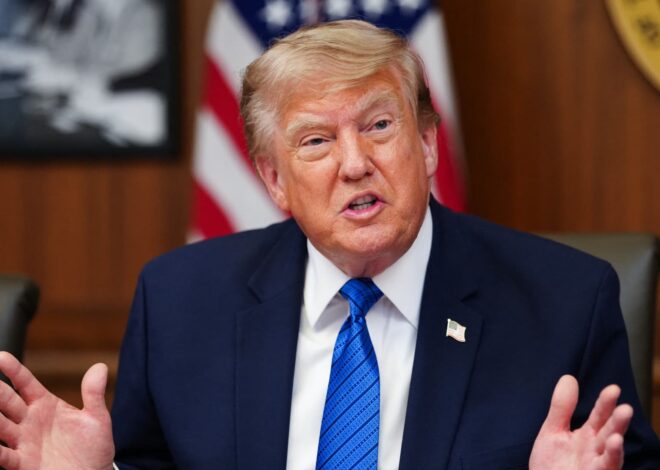
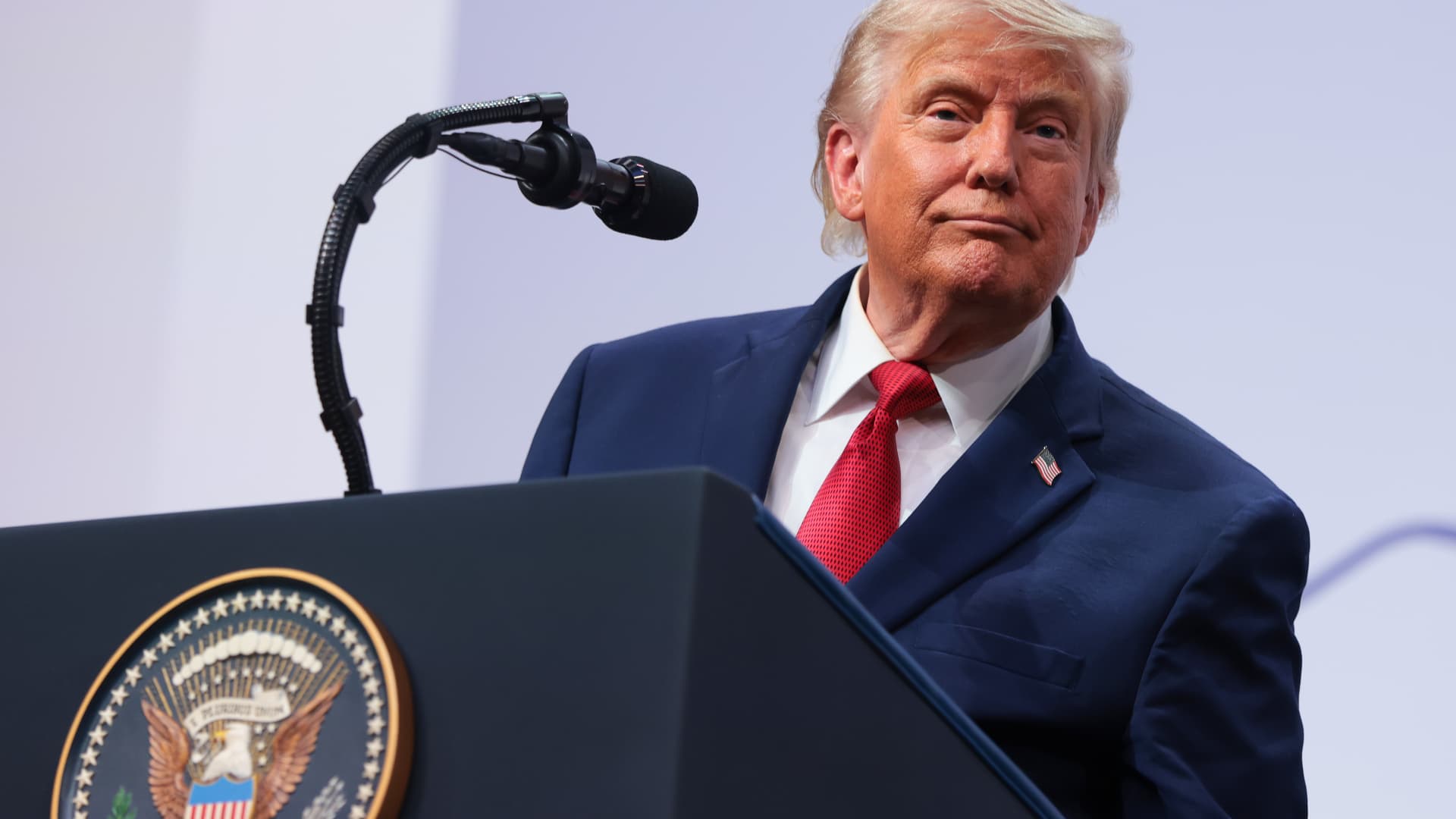
President Donald Trump on Thursday lashed out at criticism over the terms of the interim U.S.-Iran peace deal, saying those who think he hasn’t been tough enough on Tehran were either “jealous, bad people or stupid.”
Read more Roy Cooper’s North Carolina Senate race could help decide control of the next Congress
His comments come shortly after the U.S. and Iranian presidents electronically signed a 14-point memorandum of understanding to extend the ceasefire, including in Lebanon, and reopen the strategically vital Strait of Hormuz.
The deal sees both sides commit to further talks to reach a final agreement over the next 60 days and includes a $300 billion plan for Iran’s reconstruction as well as the removal of “all types” of U.S. sanctions against the Islamic Republic.
The interim agreement has prompted many to conclude that the terms appear to have strengthened Tehran’s hand.
“These fools, who think I haven’t been tough enough on Iran, when the Stock Market Just Hit A RECORD HIGH, and Oil prices are ‘tumbling’ down, are either jealous, bad people, or stupid,” Trump said Thursday via his Truth Social platform.
The U.S. stock market recently notched a fresh record high and oil prices have fallen on news of the Iran peace deal, although they remain significantly higher than pre-war levels.
Iranian leaders have broadly sought to frame the agreement as a strategic victory. Iranian President Masoud Pezeshkian described the MOU as an opportunity to tackle Iran’s economic and political problems, saying it could help to create “a different world” in Iran and the Middle East.
“I think it is fair to say, at least what has been given to us in terms of the 14-point plan, the language is quite favorable or heavily favorable towards Iran,” Amrita Sen, founder of Energy Aspects, told CNBC’s Dan Murphy on Thursday.
“There are a lot of details that still need to be worked out. For instance, the pace at which the ships are going to be allowed, right?” Sen said, referring to language in the MOU about the U.S. removing its naval blockade and Iran making arrangements for the safe passage of commercial vessels.
Under the MOU, Iran says it will allow the safe passage of commercial ships without tolls for 60 days only. The country will then hold talks with Oman “to define the future administration and maritime services” in the Strait of Hormuz in discussion with the other Gulf states.
In justifying the interim peace deal with Iran, Trump reaffirmed his view that Tehran should never be able to acquire a nuclear weapon.
He did say, however, that Iran should have the right to enrich uranium, receive access to billions of dollars in frozen funds and be allowed to develop ballistic missiles. All of these issues test what has up until now been red lines for the Trump administration.
The U.S. president, attending a meeting of G7 leaders in France, said he hoped the deal would deliver peace across the region and lower oil prices. He also threatened to resume attacks on Iran if they failed to honor their commitments.
“If you don’t adhere to the agreement, I don’t want to do that, but we’re going to bomb the hell out of you,” Trump said at a news conference.
Three geopolitical ramifications
Trump’s interim agreement with Iran has raised questions over whether his peace agreement with Tehran was worth nearly four months of war. It also invited comparisons to former U.S. President Barack Obama’s nuclear deal with Tehran.
Read more Obama Center launch brings Democratic political glitterati to Chicago ahead of crucial elections
Trump scrapped the Joint Comprehensive Plan of Action, which was agreed in 2015 under the Obama administration, during his first term in office, calling it “an embarrassment” to him as a U.S. citizen.
Speaking to ABC News in an interview on Sunday, ahead of the new deal being announced, Obama said he was “doubtful” any deal with Iran put forward by the Trump administration would be “significantly different” from the JCPOA.
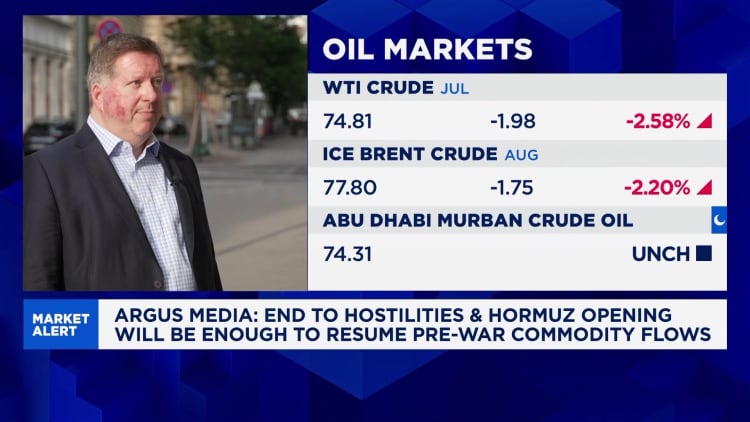
Holger Schmieding, chief economist of Berenberg, said that while a final verdict depends on the full details of the framework agreement, Iran “seems to have largely prevailed on many counts” based on what has been reported so far.
Indeed, the Iran war seems to have strengthened rather than weakened the hold of the Revolutionary Guards over Iran, Schmieding said Thursday in a research note, despite the Iranian regime suppressing an uprising in January by killing thousands of demonstrators.
He pointed to three geopolitical conclusions from the experience of the last 100 days.
Despite an intense bombing campaign, “the US has failed to achieve some of its stated targets including regime change in Tehran. This has likely weakened the geopolitical standing of the US,” Schmieding said.
The conflict has also shown, as in the case of Russia’s war with Ukraine, how lesser powers with drones can thwart the military ambitions of greater powers, Schmieding said.
And third, just as the surge in oil prices temporarily replenished Russian President Vladimir Putin’s war chest, the latest correction in oil prices will now hurt Moscow. “If the Strait of Hormuz re-opens for good, the financial situation of Russia will become more precarious again,” Schmieding said.
What now for Iran and the region?
The National Iranian American Council (NIAC), a Washington D.C.-based advocacy group focused on advancing diplomacy between the U.S. and Iran, described the agreement as “the most significant diplomatic breakthrough since the outbreak of the war” on Feb. 28.
“Yet despite growing momentum behind the agreement, its future remains uncertain,” the NIAC said in a post published Wednesday.
“While senior officials in both Tehran and Washington are presenting the accord as a pathway to ending the conflict and opening a new phase of diplomacy, it faces determined opposition from Israel, hardliners in Washington, and a vocal faction of Iranian conservatives,” it added.
Torbjorn Soltvedt, principal Middle East analyst at risk intelligence company Verisk Maplecroft, said Tehran will retain “significant leverage” when negotiators turn to Iran’s nuclear program, ballistic missile threat and support for armed groups in the wider region.
“Previous negotiations always carried an implied threat to shipping and energy infrastructure, but the extent of the disruption over the last three and a half months will strengthen Iran’s hand,” Soltvedt said in a research note published earlier this week.
Read more Hegseth warns NATO allies that some nations will ‘fail’ U.S. defense review